Every year on April 22nd, Earth Day commemorates the 1970 start of the contemporary environmental movement. Earth Day is now generally acknowledged as the world's largest secular celebration, with over a billion people participating each year in a day of action to improve human behavior and implement global, national, and local policy reforms.
We want to celebrate and raise awareness about the need of fighting for our planet and appreciating all of its beauty. Enjoy this compilation of TIFA 2021 winners in the Nature category, which includes some of the stunning professional images submitted to the competition.

Summer Forest Fairies - Kazuaki Koseki
Himebotaru, a Japanese native firefly species, flies over the forest, blinking for a brief period of time, evoking Christmas illumination. The scene is stunning enough to make you forget about the night forest's amazement. For only 10 days in the summer, it is the radiance of life. Forests are living organisms with a diverse range of vegetation and wildlife. Each creature's lifespan is unique; time will pass through each life, and life will be repeated. They are a priceless existence that should not be jeopardized. The photographer just wishes for the preservation of this woodland and its firefly.
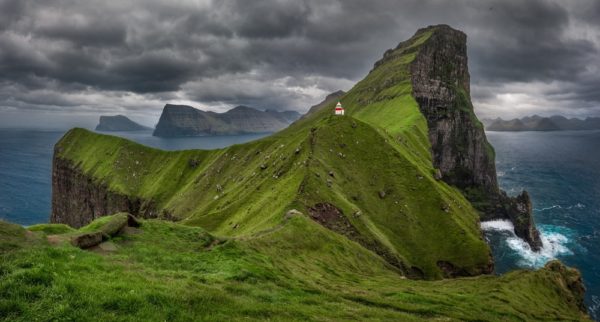
A Lighthouse - Henrique Murta
Furious land. There is no sun, and the light is dim. Heavy clouds are straining to stay afloat. High waves and cold water. Strong gusts are slamming onto the cliffs. Lands that are hostile and where one may not live long. There's a light to help you through it all.
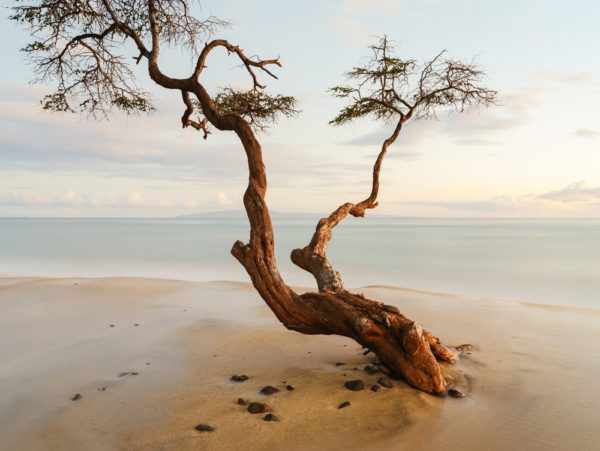
Kiawe: Coastal Trees of Maui - Scott Reither
I was drawn, again and again, to the swirling thorny branches and last rooted remains of the Kiawe trees littering the coast. In every aspect of life, there is Form and there is Space. In photography, Form refers to the subjects and shapes, while Space is everything in between. Internally, Form is represented in our thoughts and emotions, while Space is the stillness that surrounds them. Finding a balance between Space and Form is an important practice both personally and artistically.
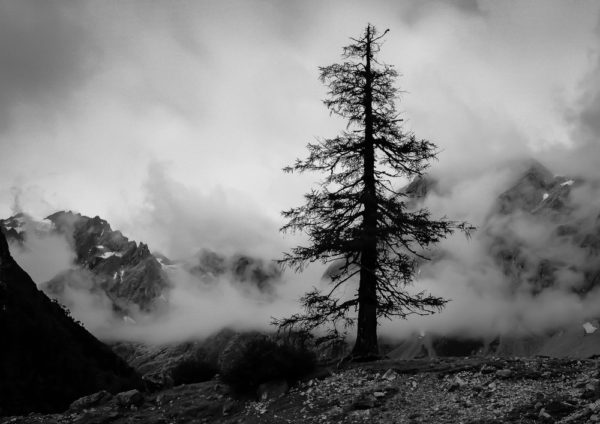
The Last Guardian - Zhikun Yang
The lonely pine tree on the snow mountain at an altitude of 4200 meters has survived years of earth movement, climatic change, and human activity. The human homeland is being guarded. Allow life to continue while protecting the environment.
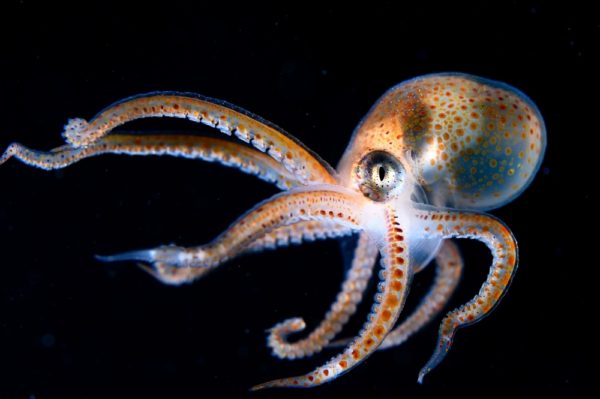
Glittering Juvenile Octopus - Sayaka Ichinoseki
This is a larval stage. A colossal pacific octopus. Even the biggest pacific octopus, which can grow up to 3 meters in length as an adult, has a childhood.
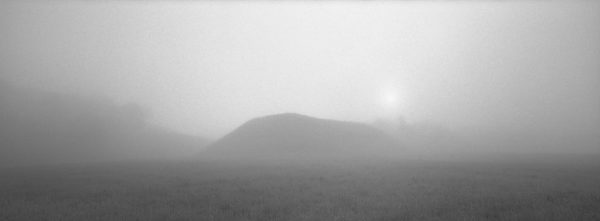
A Mystic Place - Virgilijus Usinavicius
Morning fogs cover everything from holy gardens to historic burial sites in Kernav as mystic days break above the mounds. It was the medieval capital of the Grand Duchy of Lithuania and the last European pagan capital, located in the famed Pajauta Valley. Various cultural, historical, and archaeological sites going back to the late Palaeolithic Period abound in the region. One may practically feel the souls of ancestors breathing behind one's shoulder on such mornings. Neo-pagan societies still congregate to kindle holy fires at spectacular stone altars atop bald hills.
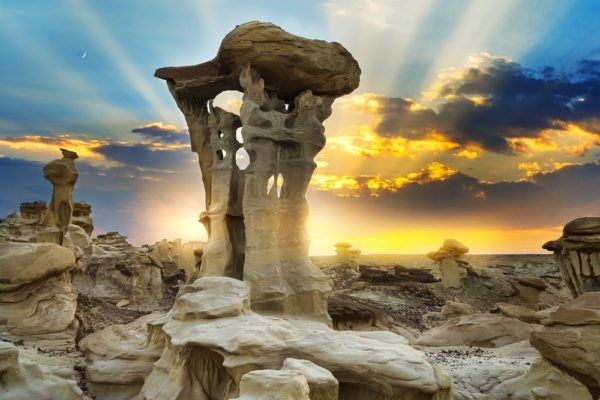
Alien Sunset - Craig Bill
After setting up camp, some of the first catches were "Alien Sunset." While resting and soaking in the low sun glow, the photographer was thrilled to observe sun rays streaming from the final light.
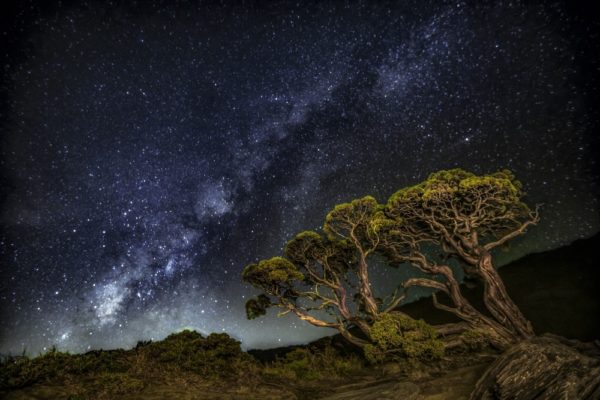
Millennium Pine Tree and Milky Way - Ling Jyi Chao
In Taiwan's Hehuan Mountain, there is a thousand-year-old pine tree. It was captured when the Milky Way was visible. It was really stunning!
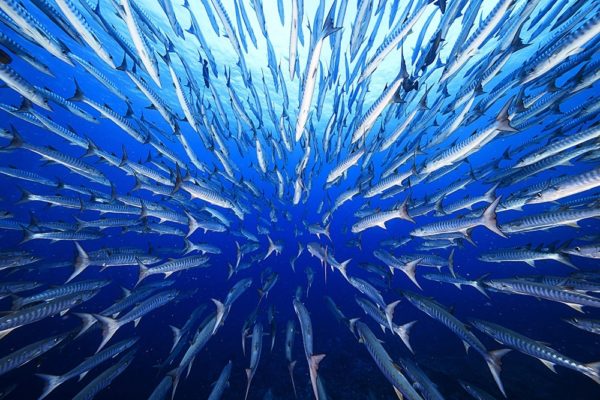
Barracuda - Yung-Sen Wu
The great barracuda (Sphyraena barracuda) is a huge, predatory ray-finned fish that may be found in subtropical waters all around the world.
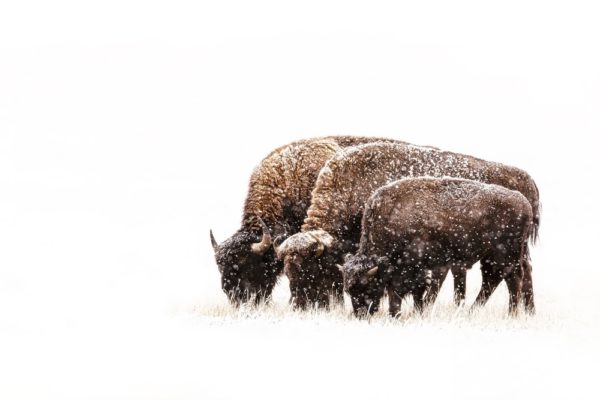
Family Bonds - Lars Gesing
When things are rough, we lean on the people we care about and trust the most. When the photographer had the wonderful fortune of observing this family of bison endure a deep, early-season Colorado snowfall, he instantly thought of that. He'd been watching the herd for quite some time. Initially, these amazing creatures were dispersed, each going about its own thing. But then something wonderful occurred. Individual family members within the herd began to congregate near each other as the snow began to fall more forcefully, in a spectacular show of the power of family relationships.
Read more:
The Tokyo International Foto Awards committee gets hundreds of outstanding images each year, making the selection process more difficult than ever. Our favorite TIFA Honorable Mentions from 2021 offer us fresh viewpoints in all of the categories, despite the fact that they weren't picked as category winners.
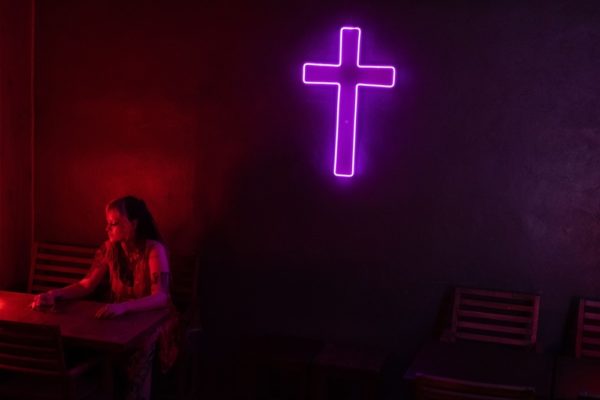
Baikal Blues - Arthur Bauer
Irkutsk, on the shores of Lake Baikal, was the setting for a picture project about Russia. When there isn't a pandemic, the city is bustling with activity. Social and cultural life has been reduced to a bare minimum as a result of increased incidents. The city was shrouded in a haze of tranquillity and sorrow. The sensation of being trapped in a transit zone permeated throughout the populace. This feeling, accentuated by COVID-19, accurately defines the country's current status. Many individuals are hoping for something else to happen. True growth, on the other hand, is being stymied by a system that is growing increasingly authoritarian in its repression of any kind of resistance.
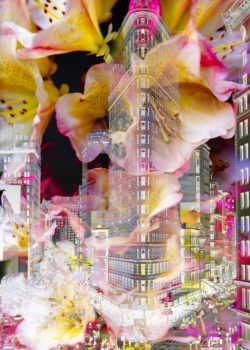
Negativityness - Robert Ripps
This ongoing project began as a response to the political climate in the photographer's country over the last few years—everything seemed to be about negativity, division, what is truth (and what is unquestionably false, yet touted as truth), and how the surface of things can be 180 degrees opposite from what is beneath—but has since expanded to include the effects (and possible fantastical outcomes) of the Covid-19 pandemic. What would happen if nature took over, if greenery overtook the familiar and changed it into something oddly beautiful, yet curiously different?
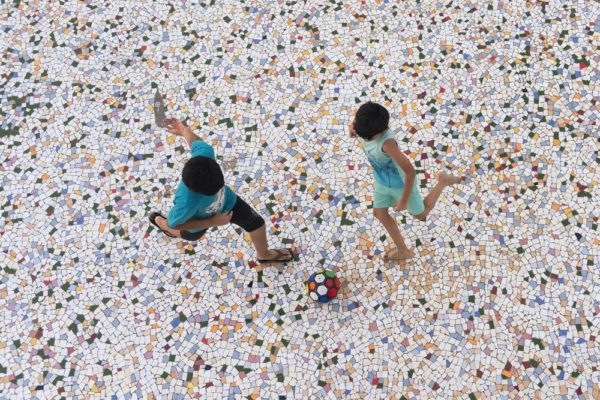
Mosaic Turf - Sudeep Mehta
On April 4, 2020, two children are seen playing football on the rooftop of their apartment building in Mumbai, India, while all public spaces and parks are closed due of the worldwide COVID-19 epidemic. To limit the viral epidemic, the Indian government imposed a countrywide lockdown on March 22, 2020, which was subsequently extended to 54 days. Sudeep Mehta took the photo.
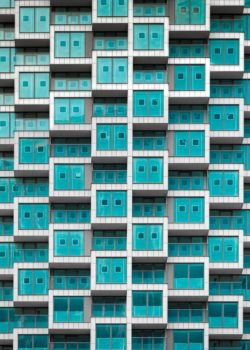
Caged - Katherine Young
Apartment block under construction. Katherine Young is a self-taught fine art photographer living in London. She began her own trip photography adventure with the goal of capturing the soul of each location she visited. She eventually concentrated her emphasis on cityscapes and architecture after being inspired by Singapore's modern surroundings. She has recently developed an interest in nature and seascapes.
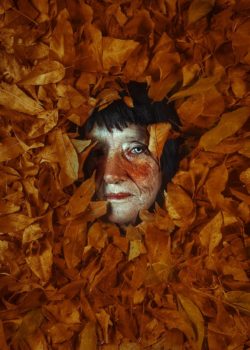
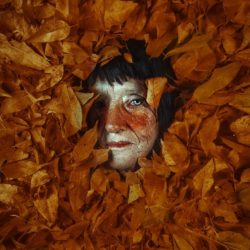
Grandma - Salem McBunny
Color, dreams, and her life filled each shot with a personal touch, inspired by the magic and beauty that may emerge when merging items that were at home and the photographer's grandma as a tremendous influence for him.
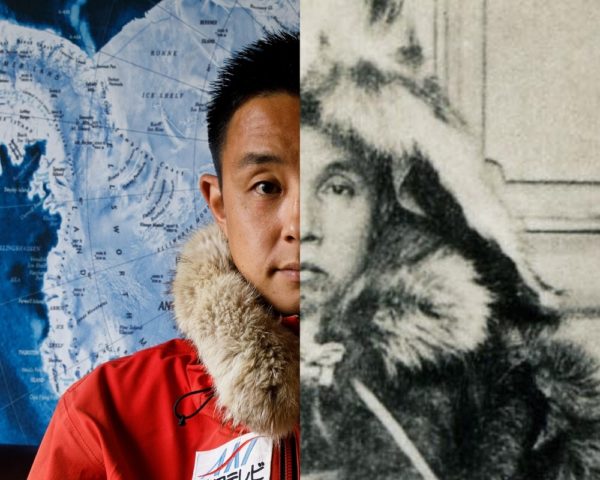
80°05′ - Kouta Takahashi
A Japanese adventurer named Nobu Shirase attempted to reach the South Pole on a dogsled in 1912, but gave up around 80°05′ south latitude. From there, Masatatsu Abe, a modern-day explorer, charted a previously uncharted path with the goal of reaching the South Pole on foot. A problem that spans nearly a century. What makes people want to embark on an adventure?
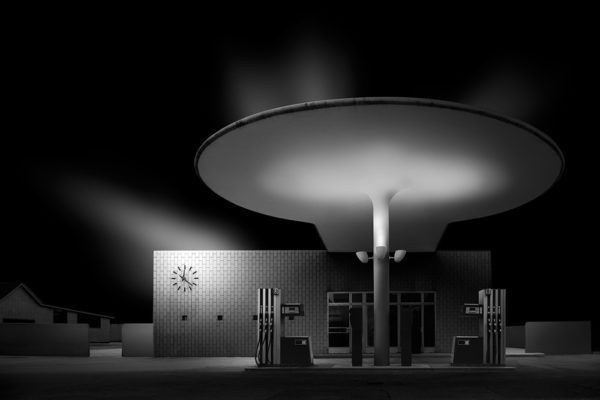
The Most Beautiful Gas Station In The World - Jacob Surland
Arne Jacobsen, the world-famous famous architect, constructed this petrol station, which may be the most beautiful in the world. It is situated in the country of Denmark. To avoid shadows, the photo was shot in overcast light, and all lighting was applied as an artistic approach called Visionography - take control of the environment and visualize through controlled light management.
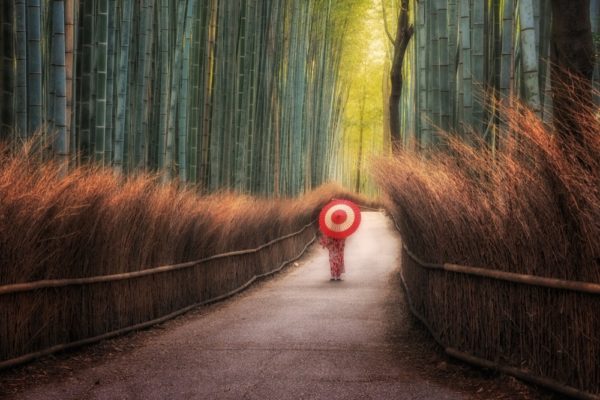
Morning Walk In The Bamboo Forest - André Wandrei
A traditional kimono-clad Japanese woman takes a morning stroll through a bamboo grove near Kyoto. This shot was taken just after 6:00 a.m. in the morning. During the day, a large number of people, mostly tourists, congregate here. As a result, the only time to get nice shots is early in the morning.
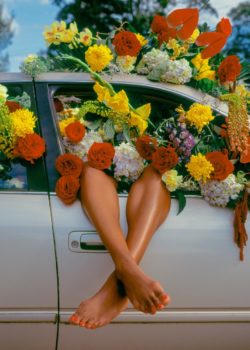
The Eraser - Kriss Munsya
The Eraser is a film about a person who has the capacity to erase previous traumas caused by anti-black racism. However, the erase process is imperfect, resulting in visual disorder and emotional hope.
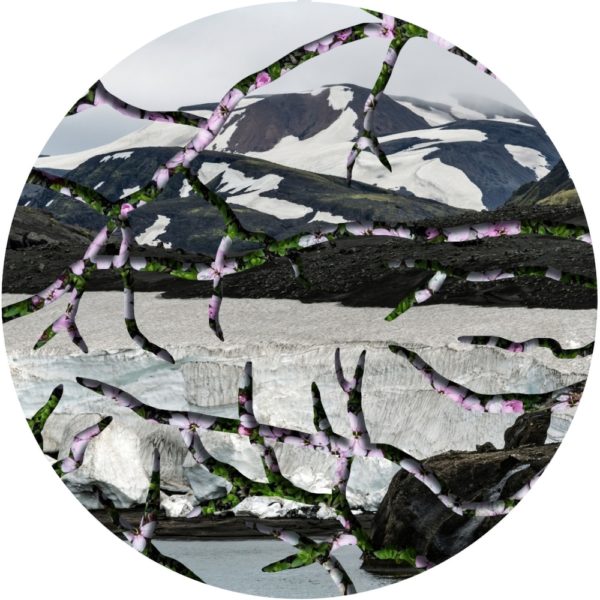
A Sense of Place - Imprints - Charlotta Hauksdottir
These sceneries are recreations of locations from a long-forgotten motherland. Hand-cut images with fingerprint, palm, and eye patterns, as well as abstract landscapes with many photographs with different cuts put together to imitate landforms, are among them. The resultant pictures speak to the interactions between man and environment, as well as the flaws in recollection, prompting the viewer to fill in the blanks with their own experiences. Finally, the visuals relate to our own responsibility for our imprints on nature by including human biological patterns.
Read more:
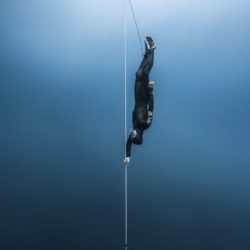
This compilation includes a selection of the 2021 TIFA winners in the Nature category. Admire these wonderful works of art and see if they inspire you to enter this year.
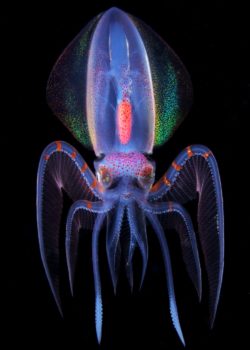
Mysterious Encounter - Ryo Minemizu
The squid drifting in the black night is a diamond squid juvenile. The length of the mantle is 4 cm. That translucent skin is coated in a plethora of chromatophores that reflect light magnificently, giving it the appearance of a gem. The adult diamond squid dwells in the open ocean's deep depths, therefore we're unlikely to see one when scuba diving. However, juveniles and larvae spend some time in the open ocean's shallow water, and we may come across them when we move offshore.
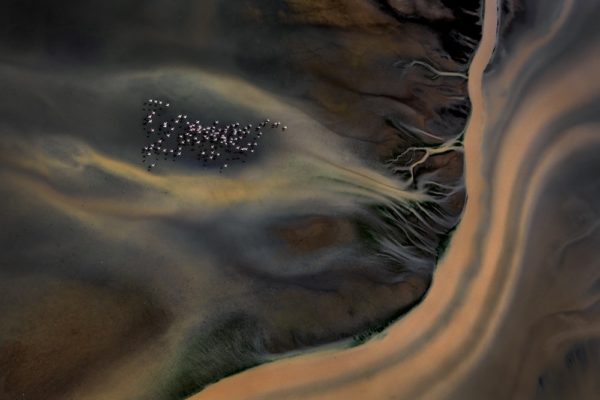
Color Palette - Richard Li
Lake Natron is located on the Tanzania-Kenya border. The Ewaso Ng'iro River, which is supplied by hot springs rich in minerals including sodium, alkalinity, and magnesium, nourishes it. During the dry season, significant levels of evaporation lead the lake's alkalinity to reach a pH of 9 to 10.5 and the water to become as shallow as tens of millimeters, showing the lake's brilliant patterns like an odd work of nature. The lake is a haven for flamingos, who flock together to soar above it in large flocks. I happened to be at the right place at the right moment.
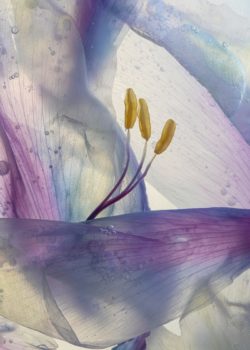
Elvira'S Peony - Maja Strgar Kurecic
These are images of the peony that Elvira gave me. Maja Strgar Kurecic, the photographer, enjoys photographing flowers that she received from friends and family. In doing so, she hopes to retain the memory of that joyful moment of receiving, which evokes feelings of love, respect, and intimacy with the person who presented me with the flower. She aims to capture the everlasting beauty of a flower that never fades with the manner she photographs and the lighting she uses. She shot the petals in water to show their fragile structure.
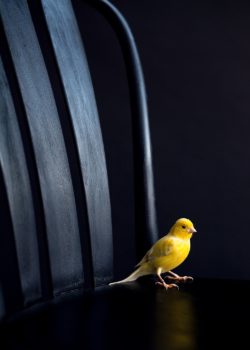
Winged Singer - Weronika Markiewicz
The Harz Canary, also known as the Winged Singer, is a bird that sings softly and beautifully. It is a magnificent breed because it can sing in a variety of tones without opening its beak, including rattling, bass, bell, and flute. The canary in the photo is from Mr. Marek iedzwiadek's kennel in Lublin (Poland).
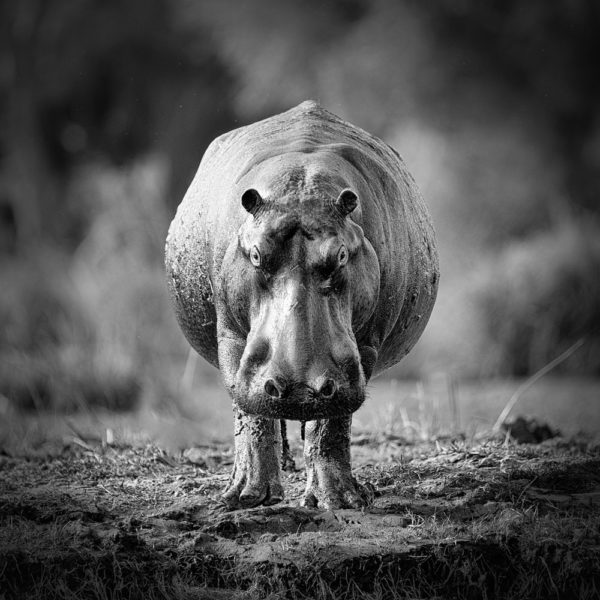
Hippopotamus Amphibius - Dennis Wehrmann
One of these images has been on Dennis Wehrmann's thoughts for years, and he's yearned for it for a long time, but it finally came true this year at the Lower Zambezi Nationalpark. He was hoping to see a hippo standing outside the water, gazing at him straight, his eyes focused on him, his rage flaring and firing directly at him. As usual, these moments you've been looking forward to appearing out of nowhere and going in an instant, regardless of whether you comprehend what's going on in front of your eyes or if you're able to realize whatever's on your mind...
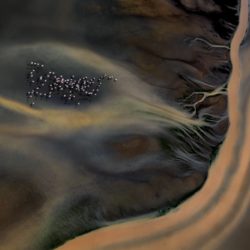
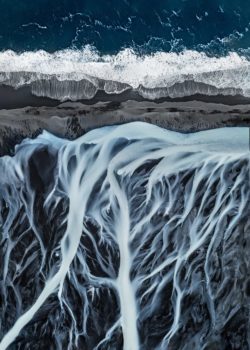
Veins - Daniel Franc
When an Icelandic glacial river reaches the sea. Daniel Franc uses drone photographs to make fine art shots of generally abstract or minimalistic landscapes, wildlife, and industrial environments. They show beauty, rhythm, weirdness, and portals to realms not seen from our vantage point.

Autumn Float - Saowanee Suntararak
Autumn in Japan, at Lake Kawaguchi. Photographers adore Mount Fuji with fall foliage, and Saowanee Suntararak enjoys shooting photos in this season as well.
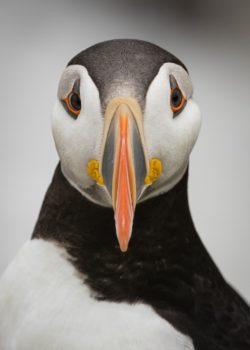
A Day With The Puffins - Jacques-Andre Dupont
Jacques-André Dupont is a keen wildlife and environment photographer based in Montreal. His work has appeared in publications such as Canadian Geographic, National Geographic, Africa Geographic, Wildlife Photographic, Outdoor Photography, Paris Match, the London Telegraph, China News, and La Pravda, among others. Several of his photographs have been chosen/won in international photo contests. They've also been shown in a number of nations throughout the world. He merely wants to achieve one basic aim with his photography: to bring the beauty of nature into the light.

Below Zero - Svitlana Zarytska
A series of "Below ZERO" photos featuring ice blossoms. Before the ice melts, ice, water, and light refraction may enhance, distort, and conserve the beauty of flowers. Each image is the result of a search, an experiment with color, light, shape, and texture in order to create a one-of-a-kind work of art.
Toronto Eclipse At The Cn Tower - Prajesh Joshi
This photo was the result of weeks of preparation. The distance from the CN tower was used to do trigonometric calculations. It was used to identify the exact location of the sun during the eclipse by comparing it to the matching compass bearing! Seeing the eclipse up close and personal gave Prajesh Joshi a tremendous therapeutic feeling. As he observed the rising light with wonderful friends who had joined him so early in the morning, there was a sense of quiet in the air.

Read more:
2024 & 2025 Winners Exhibition in Tokyo
May 26 – 31, 2026